Application and seam
Upholstery, leather goods, canvas covers, and webbing do not share a feed setting. Name the seam and whether the operator stops for corners. Throughput should be pieces per hour at your stitch length, with the length stated.
Supplier matching for one feed type
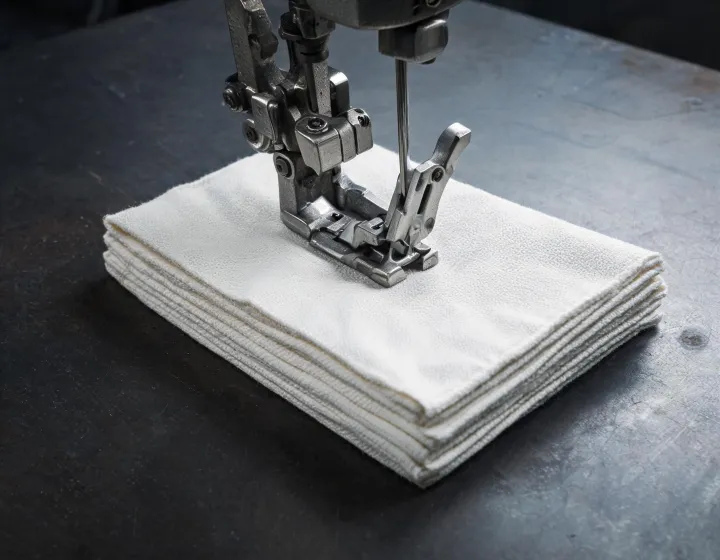
A walking foot industrial sewing machine request fails when one factory prices compound feed and another prices a drop-feed head with a different presser. This page freezes the feed, the lift, and the stack before names are collected.
Feed Top feed, needle feed, or a compound set you can describe from the sample.
Lift Presser clearance in millimetres for the thickest ply, not a brochure maximum.
Stack Material, ply count, and whether a puller or binder is in the station.
Upholstery, leather goods, canvas covers, and webbing do not share a feed setting. Name the seam and whether the operator stops for corners. Throughput should be pieces per hour at your stitch length, with the length stated.
Record the needle system and thread size the sample already uses. If the control interface is a simple pedal, say that. If a programmable stitch count is required, mark it as a separate option so a plain head is not treated as the same machine.
Ask which sewing material and stack the stated speed used. A walking foot often runs slower than a light lockstitch head. The quotation should show the test basis, not only a no-load maximum.
Datasheet for the proposed head, a note on alternating presser travel, motor voltage, and whether air is required for the foot or the cutter. The factory acceptance test, if offered, should name the material ply.
Stitch type, sewing material, quantity, US destination, and the date you want the station. Add presser lift, needle system, table and motor, voltage, and air if a cutter is involved. Optional budget needs a currency and a per-unit or whole-order basis.
No. High-end, mid-range, budget, or not yet decided is a preference about documentation and build. It is not a rating this desk has checked, and it does not replace the specification.
No window is published, and no machine is reserved. The next step is to read gaps, then ask factories that can quote the written feed and stack. Timing comes back on their sheets.
There is no upload field. Describe the drawing or sample in the requirement text, then send files when the desk replies. A missing drawing stays an open item, not a silent assumption.
Related paths: heavy duty rows, same-basis price lines, the brief form, and the procurement brief.
The form keeps your words. Budget and preference are added only at send, and only for that form.
Qualified business buyers
A confirmed benefit may be up to 3%.
Eligibility applies to qualified business buyers and is confirmed after we review your product, quantity, destination, and sourcing requirements.